Eloïse Bouton, the daily battle
Text: Laure Siegel / Photography: P-Mod
Freelance journalist, author and feminist activist, Eloïse Bouton questions our representations of gender. In an article published in 2015, Bouton, who enjoys getting tattooed asked an important, long overdue question: "Why do tattoo magazines continue to stick images of half-naked women on their covers?"
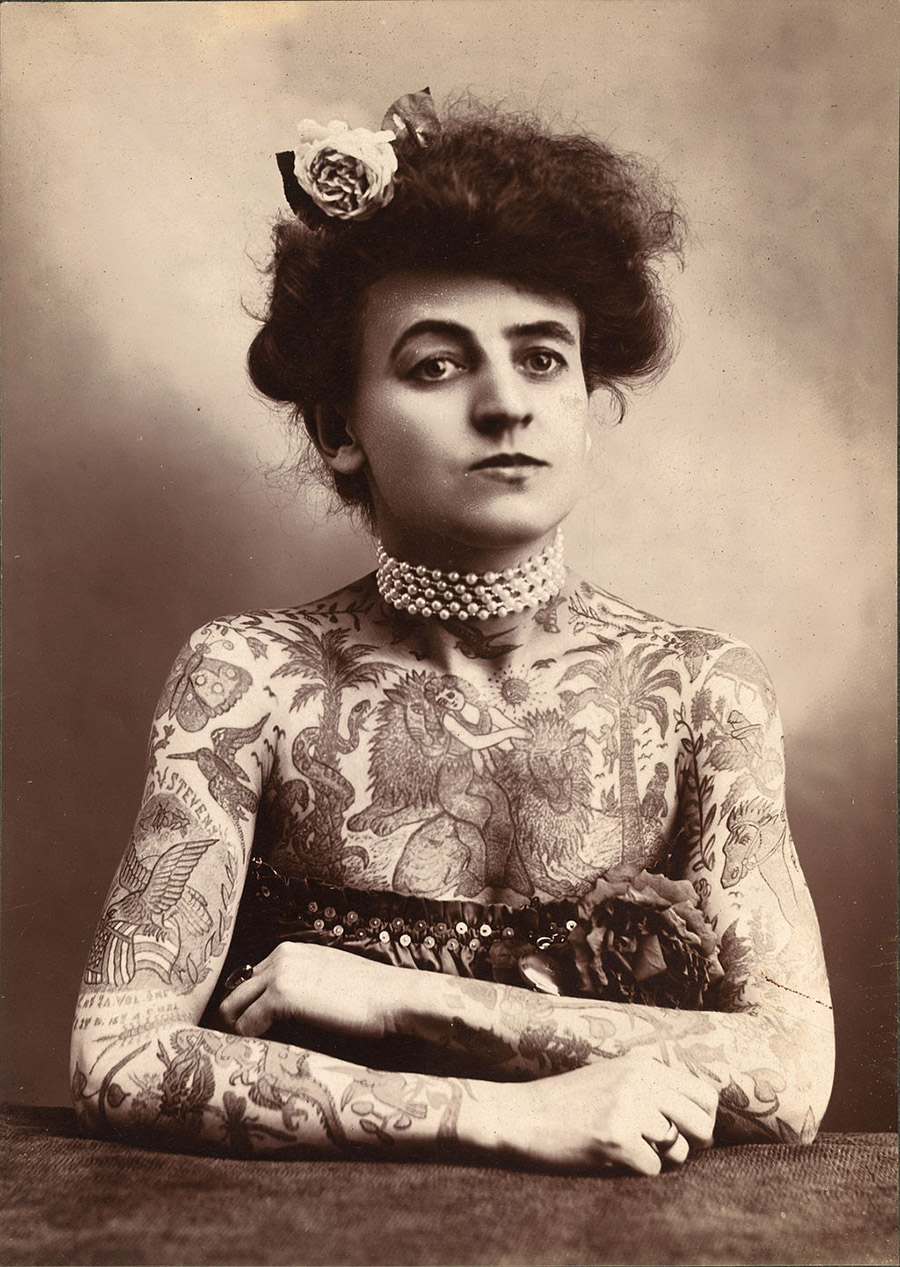
Maud Stevens Wagner (1877-1961), traveling circus performer and the first known female tattoo artist in the United States.
We talk about media, feminism, tattoo, music and the importance of images and words.
As far back as she can remember, Eloise has always been attracted by counter-cultures. As an adolescent, she dragged her sneakers into various cultural underbellies - she is a big fan of hip-hop and likes the radical aspects of tattooing. As part of her English studies, she undertook a research project on African-American feminism and civil rights movements in the United States. "I met a lot of women with thug life tattoos, prison-style. I was interested, there was always a story, a meaning. One day, one of these women showed me a documentary about Maud Wagner, one of the first American female tattoo artists. She was a circus performer and had her whole body tattooed. I was fascinated by the counter-cultural, political and feminist aspects of her life."
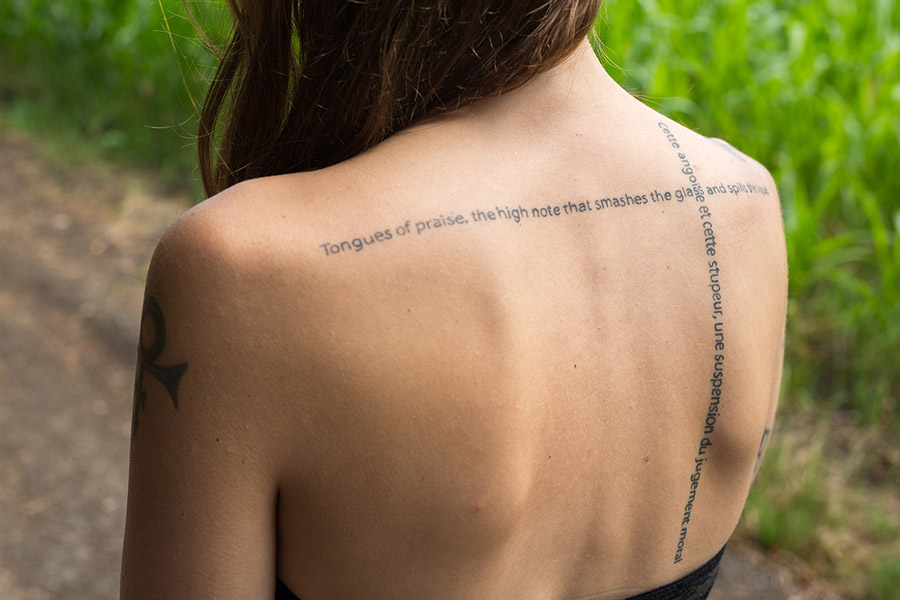
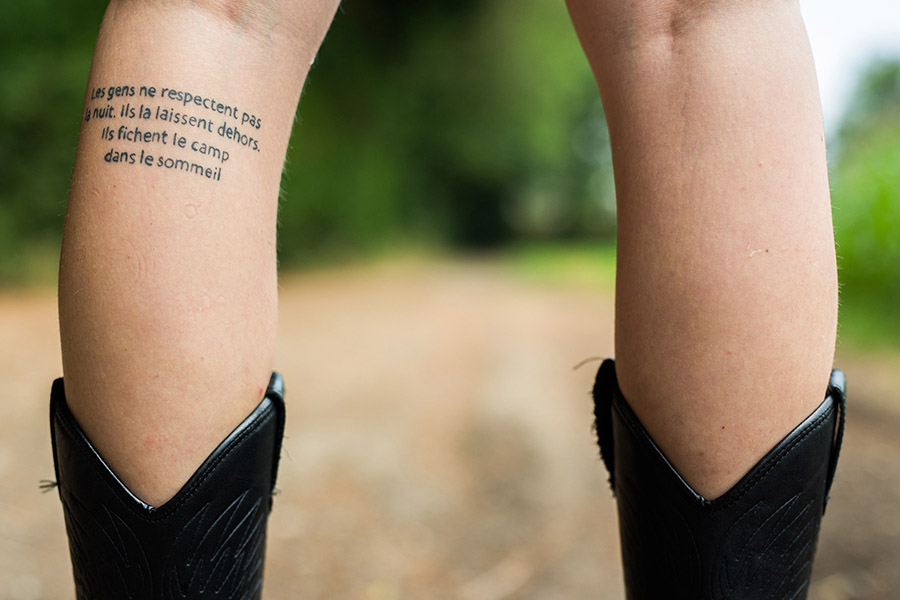
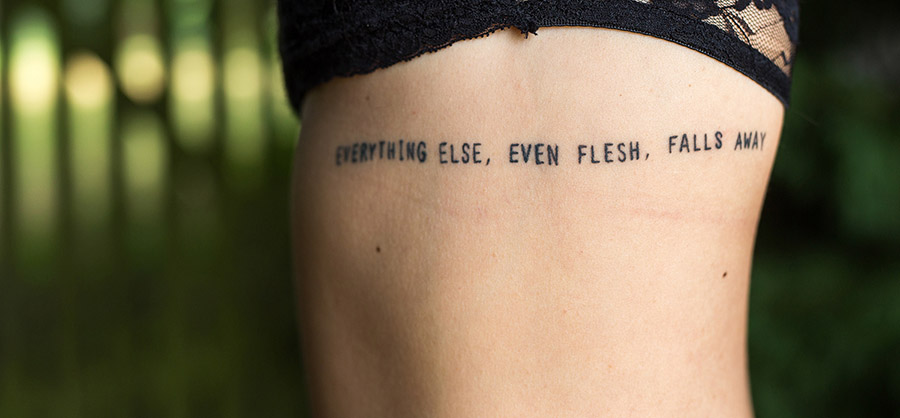
Eloïse Bouton, writer and Femen
Eloïse first got tattooed when she was sixteen - "I lied about my age" -, and received her first piercing a little earlier. She covers her body, tirelessly: "The tattoo went along with my reflections on feminism, gender, body. It was a way to break the doll image I was projecting of myself, a white girl with long blonde hair and clear eyes, that hyper-normal side that did not correspond with who I truly was and with what I wanted to say. I didn't necessarily do it to piss off my parents. But I definitely wanted to piss off people in general."

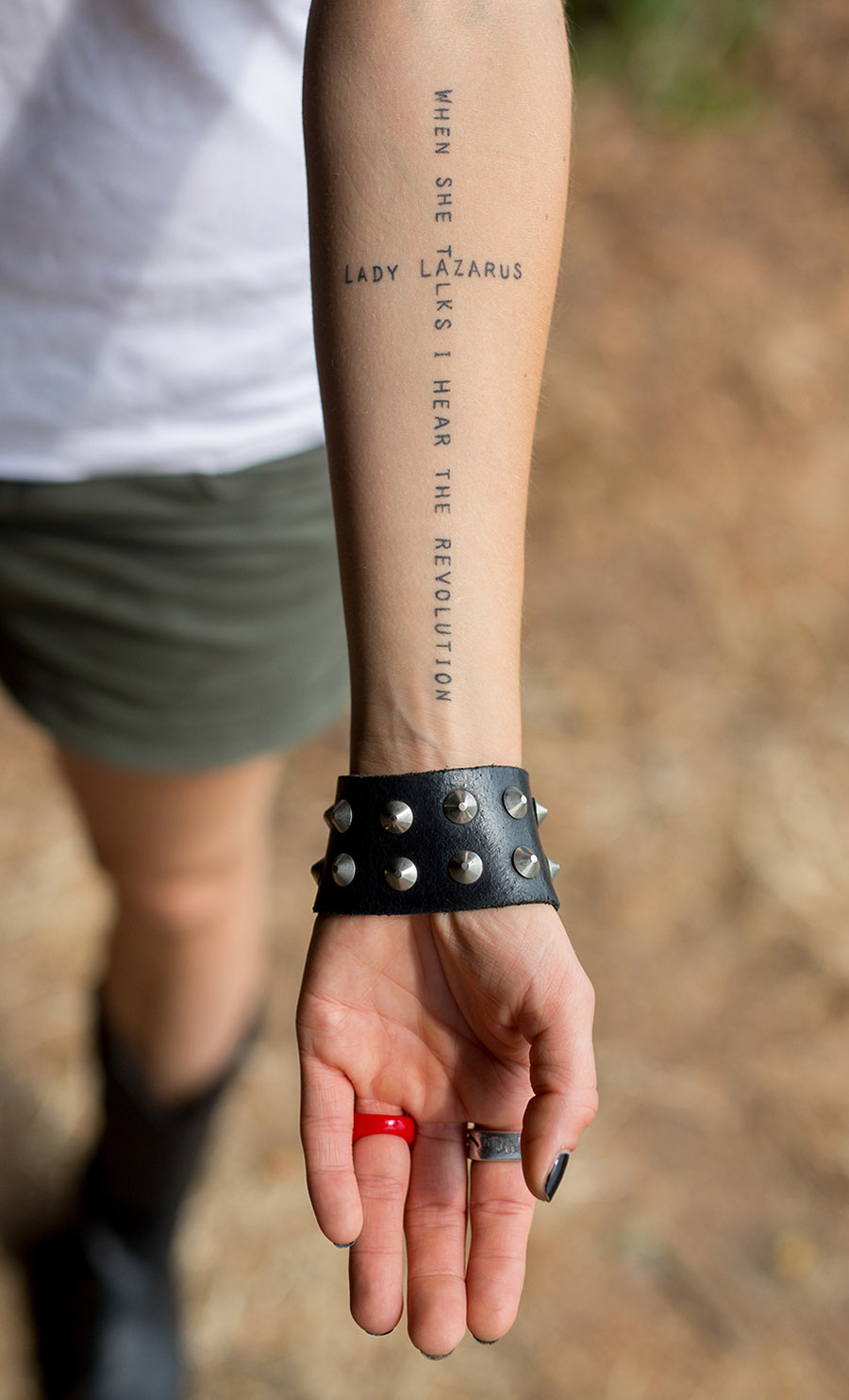
Eloïse has nine famous women quotes tattooed on her body, from Angela Davis to Frida Kahlo through the punk band Kenickie, Tattooed by Dwam. (Nantes, France)
After she graduated from university, Eloïse started working as a journalist and quickly became aware of the necessity of feminism, everywhere, all the time. "I was initially involved in various feminist movements like The Beard ("La Barbe"), which denounces the fact that women are underrepresented in politics, culture and media. I was a freelance writer then specializing in music, and I was the only girl who wanted to write about hip-hop so I was told "Ok you're gonna do something about Beyoncé." I had a rock band, I was a professional hip-hop dancer, I’d written a thesis on it, I knew the scene well, but I was not credible because I was a girl." To be able to work, Eloïse broadened her field of expertise, from music to culture in general and then from culture to society, and more specifically to issues affecting women.
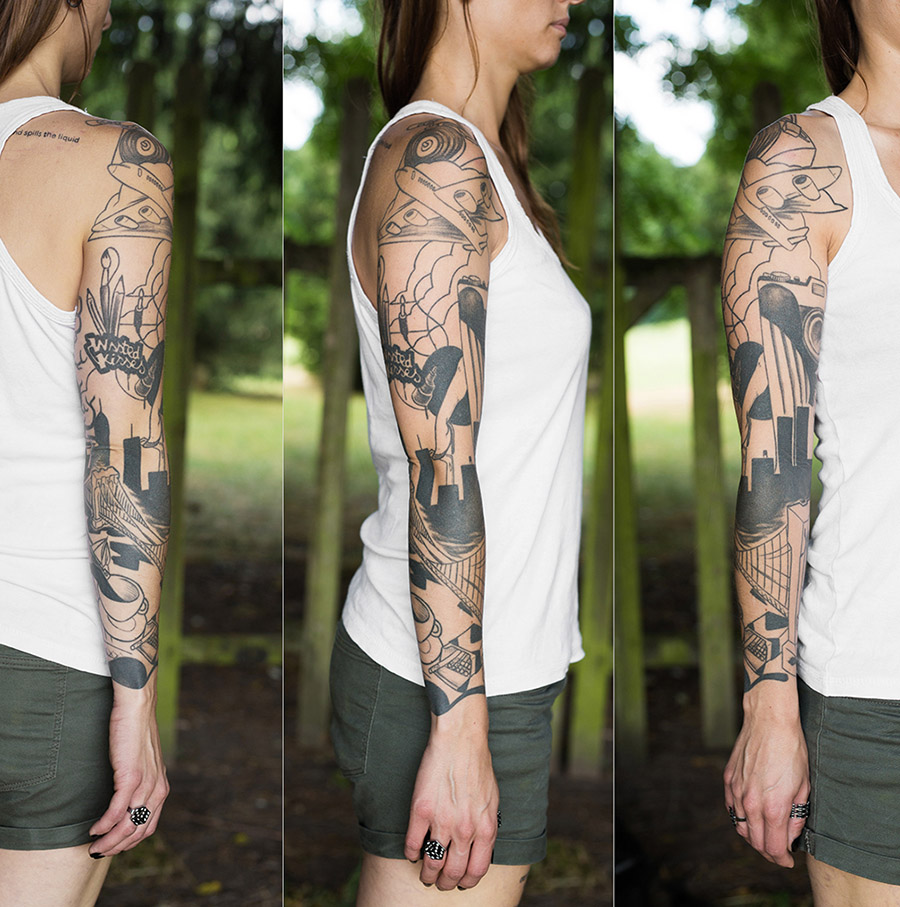
"Soft Porn Tattoo"
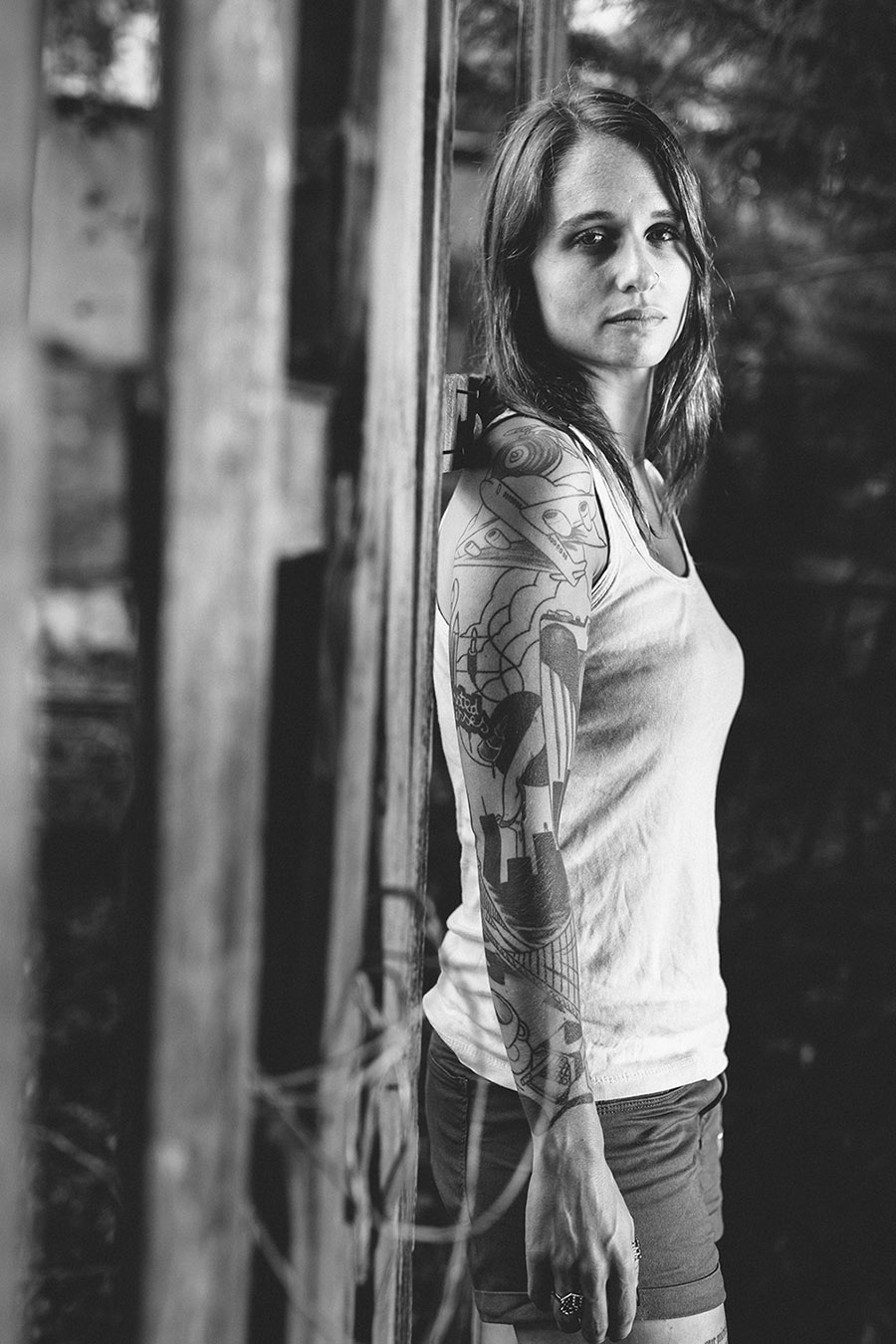
In 2012, the Femen adventure undoubtedly brought feminism back to life in France. Eloise created a national branch of the international feminist organization led by Ukrainian Inna Schevchenko. In November, a Femen action against the Catholic association Civitas, which had campaigned against same-sex marriage, took on incredible proportions. Media from around the world came to cover events where Femen were expected to turn up, if only to witness naked women take the street to scream their rage. With her right sleeve tattooed, black and red, Eloise was immediately spotted and banished from good society. "It totally killed me professionally.
I told my employers that I was still the same person. I was an activist before and everybody knew it, but I think that the nudity used by Femen touched something sensitive.But no one wanted to work with me anymore, even if I worked under a pseudonym."
Right sleeve tattooed by Entouane (Boucherie moderne - Brussels)
In spite of her years of militancy, the extent society’s will to control the bodies of women still manages to surprise her. "The weight of the church and of our Judeo-Christian heritage is still extremely strong in our society. A woman's body carries a pure and sacred dimension and must be transformed only because she carries a child or because she has her period and can have a child. But if you decide to strip naked when nobody asks you, and if you are strongly tattooed so that you have apparently disfigured your body in a vulgar manner to such a degree, that you interrupt a public event, and that in addition you carry a message that goes against all this, it is unbearable for a part of the population. We became the incarnation of sin."
In February 2014, Eloïse became the first woman in France to be condemned for "sexual exhibition" after she’s taken her top of in the Church of the Madeleine in Paris to campaign for the right to have an abortion. Since then, she has been fighting for reform of the sexual exhibition law which she considers sexist and she has protested against the de-politicization of her actions.
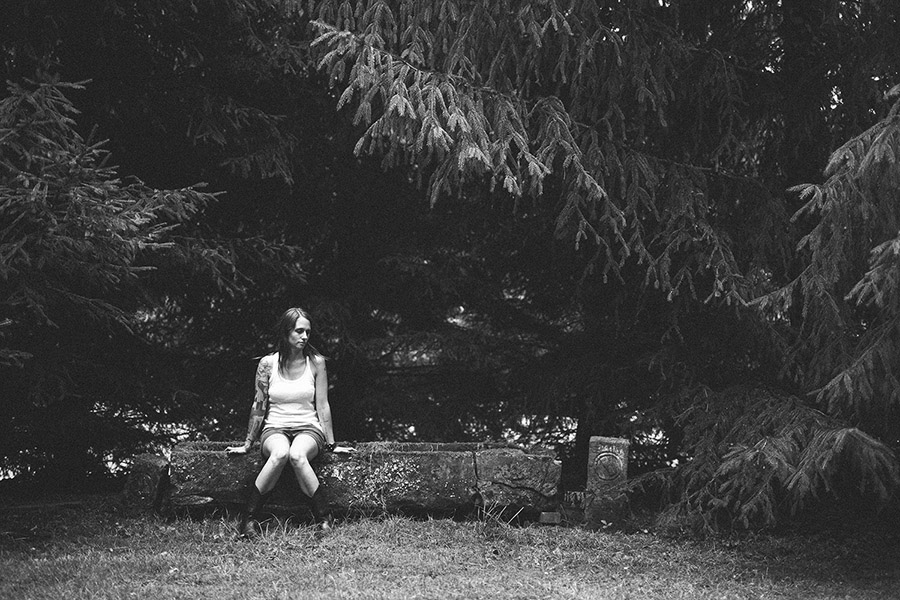
Combo "bad boy" et "hot chick"
Following her conviction, Eloïse left the Femen to regain her freedom and her breath. She again tried to find her place in the media world that had banished her for fear of her "polemic", something she perceives as contradictory, as the media feeds on polemic, "It is the paradox of this milieu. Now editors think I have legitimacy to write about women. I get more commissions again even if I take care not to be locked in this "feminist vigilante" box. But I really appreciate the fact that I have the opportunity to write papers with a strong ideological conviction. I did not have this opportunity before. »
In October 2015, Eloïse took shots at the tattoo press in Brain Magazine, attacking this niche media’s inability to evolve with time: "I wanted to understand why magazines perpetuated this debilitating soft porn vision that has nothing to do with tattoos anymore.”
At this moment, Eloïse was already angered by the burlesque pin-up shows common at conventions: "In counter-cultural circles, you expect people to be subversive, to challenge everything, but in fact many people fall back into even more normed patterns than those pervasive in general society. These people do not disentangle clichés as one would expect from them, but rather contribute to perpetuating them."
She also suspended her Suicide Girls account, a glamour website created fifteen years earlier whose mission was to celebrate alternative beauty. "All these hyper-young girls, not really tattooed or pierced, these close-ups of vaginas, the comments of guys under the photos, it had really gone bad ..."
It is necessary to go back to the source to understand the association of tattoo with female nudity. The first tattoo magazines were published in the mid-1980s by biker clubs with large amounts of spending money: "They created a very stereotyped image of genres, virile men and hyper-eroticized women. Until the middle of the 2000's, these magazines were sold on the shelves dedicated to pornography and contained erotic ads." The identity of the tattoo press, with its raw references to sex, social taboos and notorious underclasses, was forged: "It’s problematic that the nudity said nothing. A codified nudity with positions that are often submissive and hyper-sexualized. If these girls choose to go naked on their blog, it's not a problem for me, but in the specialized press, the only justification is to keep the commercial machine running and that's a problem. «
There’s a real danger that the tattoo media will no longer represent anyone anymore with this kind of gender representation. "The tattoo industry environment is changing, with more and more people coming out of Fine Arts schools and an ever-growing feminization in the milieu but the press remains blocked with this combo of ‘bad boy’ and ‘hot chick’ and continues to promote the image of an allegedly underground world that’s all of its own making. It is up to the tattoo milieu to discuss this and it would be important if the impulse to change were to come from within."
Eloïse is at the forefront of driving this discussion. With Emeraldia Ayakashim, DJ and sound designer, she founded Madame Rap, an online media that intends to reconcile rap and feminism and highlight the women who make urban cultures groove. She continues to be an activist, for big and small causes. "I am also part of a collective which fights to have the term Human Rights ("Droits de l'Homme" in French - "Men's rights") changed into human rights ("droits humains" in French), the battle lines are very clear, but the resistance we face is immense. Small things like this must be part of the debate. They are very important to raise awareness".
Her links :
"Confessions d'une ex-Femen", Eloïse Bouton (Editions du Moment - 2015)
"Les femmes en couv' des magazines de tatouage, l'apologie du soft porn" by Eloïse Bouton (Brain Magazine - octobre 2015)
For further information :
"L'art de tatouer. La pratique d'un métier créatif", Valérie Rolle, Maison des Sciences de l'Homme, 2013
Portfolio "Inked Girls"- Portraits de femmes tatouées, Laure Siegel and P-Mod



EN Ed Hardy
TEXT ET PHOTOGRAPHIES : PASCAL BAGOT
With the first solo retrospective dedicated to a tattooer which open this month (july 2019), it feels good to hear once again the words of Ed Hardy. As a real living legend of tattooing, and despite being retired, it is still with the same panache that he recalls some of the different episodes that built the californian myth, as it is today recognised by the museum of fine arts De Young in San Francisco.
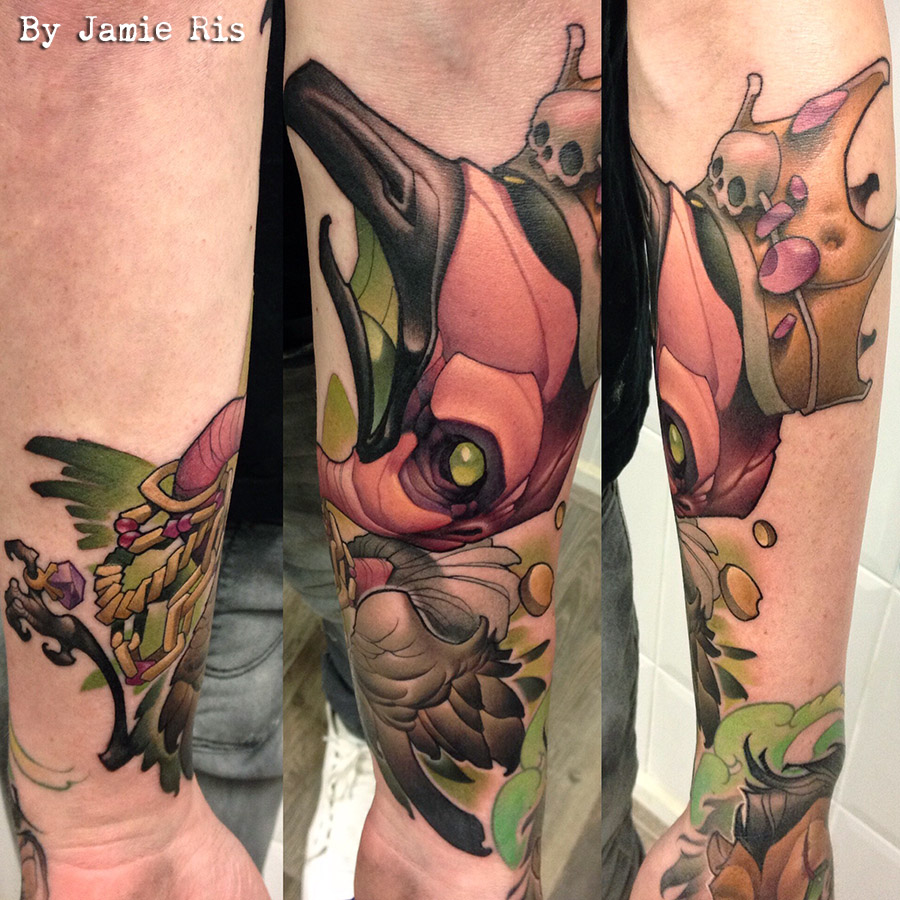
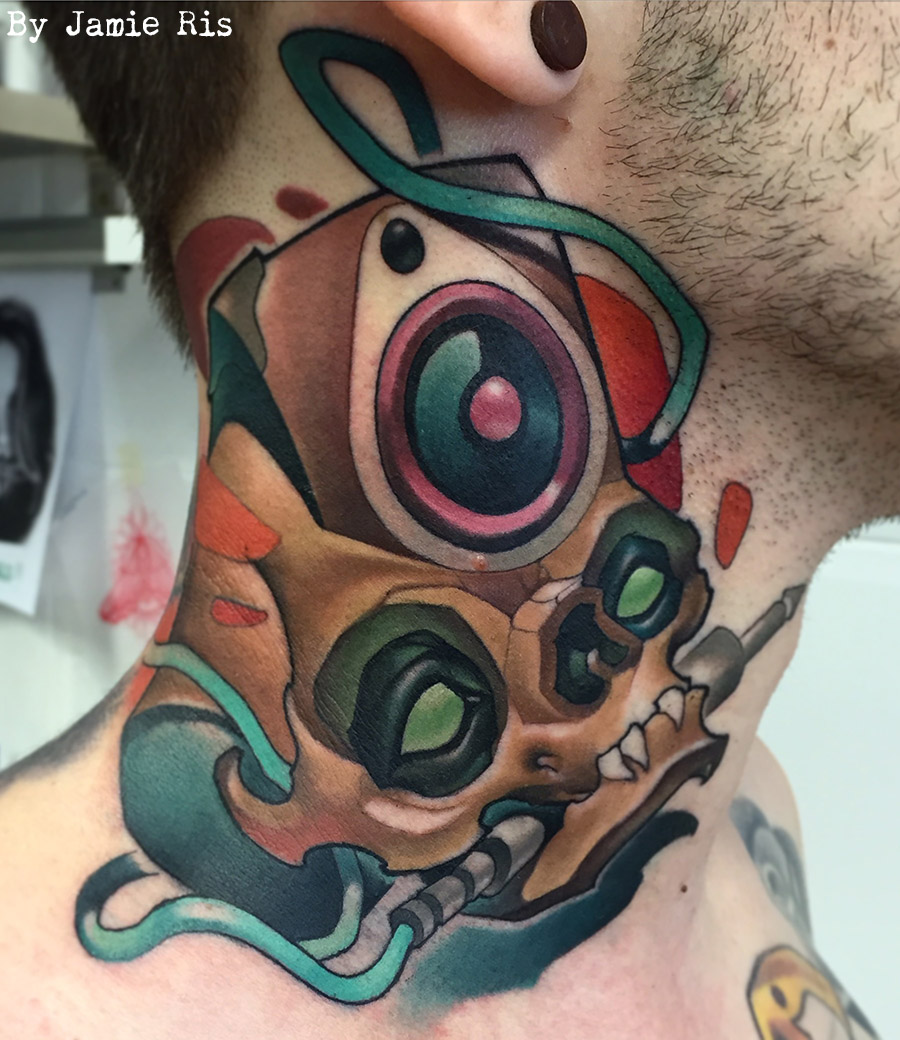


When did you stop tattooing Ed ?
In 2008. Mary Joy (tattooer at Tattoo City, Ed’s studio on Colombus Avenue in San Francisco) has the last one, a phenix. People still ask me and I would say: « I was here a long time and you could have called me then ». Years ago, people would come to me saying :« You are the only person who can do this ! ». But now ? No, there are thousands of people.
Is the tattoo world today the one you have dreamed about 20 years ago ?
It’s beyond it, way beyond ! I’m astounded by the quality level in contemporary tattooing, I’m extatic about how rapidly this has comes its way with the quality of it, the general intelligence and sophistication along people in tattooing. I’m so glad I don’t have to compete ! (laughs) Finally it opened up as a cultural option. That was my cruisade, really. It went along in the old days with racial equality and gendre identity and everything else, I just thought it was so wrong that tattooing was so looked down. I thought when I was a little kid :« Why do people hate this so much ? ». People were frightened about it. Then, I figured my work was done with that so I’d like to sit back and do my artwork, be in some shows. I’ve earn that by doing the other stuff so, I don’t feel bad not doing tattoos anymore. It’s flattering that people might still want to get tattoos from me, but I think : « Ok, this is my time ». In a sense this is my real retirement, I’m retired from tattooing.
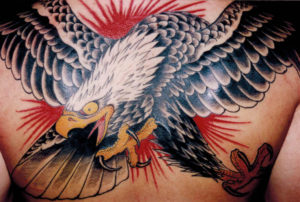
Was it frustrating when you were tattooing not to do your own artwork ?
It wasn’t really, I would often think about it, but I was fulfill by what tattooing required. It was really absorbing because when I got to that level where I was challenging for what people wanted done and especially with a lot of the big epic pieces, people brought me ideas that were fantastic you know. And I was doing a lot of the japanese stuff I loved so much. Also in those days, I was drinking a lot, so in my spare time I was fucked up. (laughs) It was like : I work really hard, and then a line of coke on the mirror, a joint, six packs of beer and that was it, that’s how I lived. I never tattooed when I was high on something though.
How did you connect to your personal art ?
I didn’t know what to do, I was terrified because I realised how dependent I had become on people’s ideas, they came in and provided the content. Sometimes not only the subject matter but also the treatment, they wanted them to look a certain way, they would ask if it was possible to do it. Some of the early things I did were more abstract, things people had never seen in a tattoo. And it was customer’s ideas. Once you open it up to the people’s ideas, I know that’s what lead the fuse for the contemporary tattoo thing.
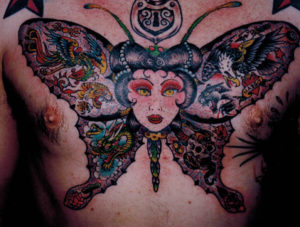
There is still a strong presence of tattooing in your paintings, how do you explain it ?
When I moved to Honolulu, I realised I had the time to think clearly and I wanted to do the art I wanted to do. But, I was making a rule in my head :« It shouldn’t work like a tattoo, I shouldn’t do any of these references ». I was desperate. What was I going to do ? I started doing paintings of gorillas, and then I thought :« That’s stupid, it’s a limitation, this is part of my life and it can be anything ».
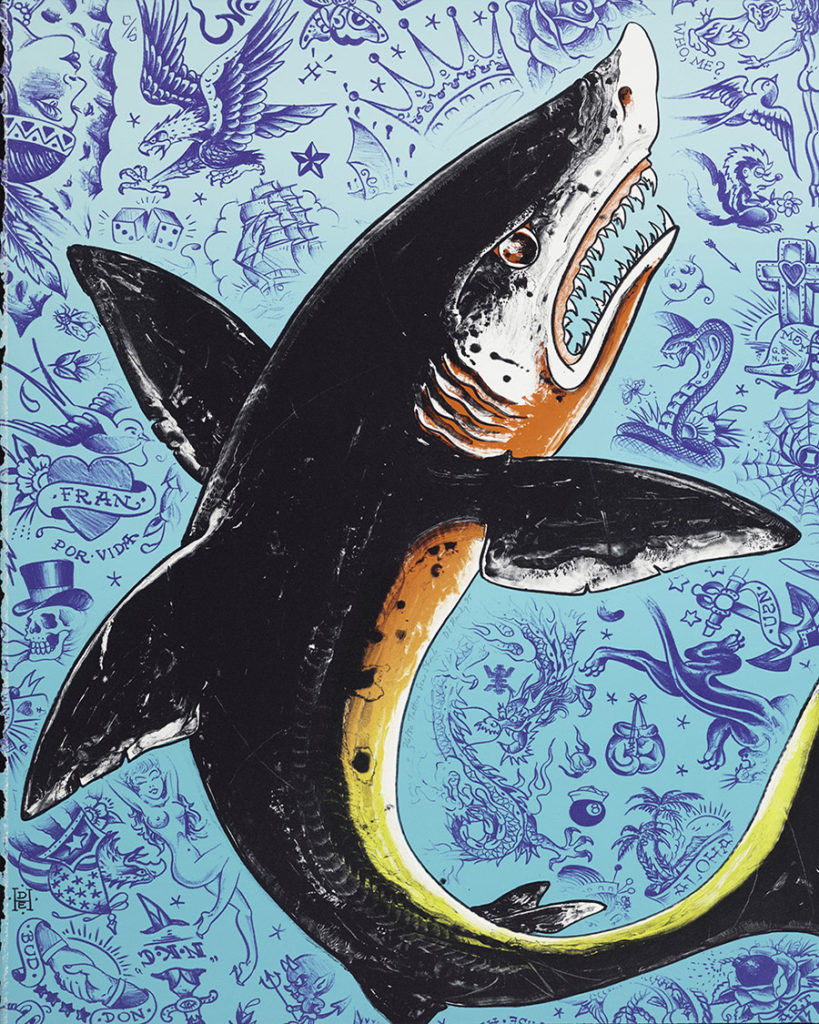
That led me tapping into just working unconsciensly with no planning ahead, small pieces with water colour, moving the brush and see what came out. I have muscle memory because I’ve drawn so many thousands of things. It was interesting to see that all these movements and forms were part of me and of my unconsciousness. It was personal liberation. Then I began mixing up all the classic, like american tattoo imagery and reconfiguring that. For me it would almost be like composing a song, writing a book, I can take these words from here and pair them up this way and then it changes.
Maybe it’s a kind of visual poetry, you connect these things and then you’ve got something new that no one has really seen or heard. Working on that stuff, that’s what keeps me happy. To me, the subject matter is just an excuse to lead somebody into appreciating things that can’t be quantified, and it really can’t be described about the way visual art hits us. I love art from all areas, all cultures, the older I’ve got, the more I am open to things. But it has to have a particular magnetism for me.
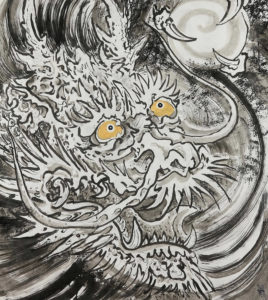
In the interview you did in the book « Modern Primitives » (1989) you said : « I can spend my life thinking about this because tattooing is in fact a medium and you can’t really encapsulate it ». Even if you retired it is still a strong source of inspiration right?
I can’t divorce myself from tattooing. I know I’ll be talking about it until the day I die…my wife is always saying « My god you’re still talking about that, it’s just crazy ! »(laughs). But yeah, it’s true.
In the 70’s, you understood the tattoo designs that were exisitng for decades were not suiting anymore the expectations of the people of the time. From that, how would you open people’s mind to new ideas?
It just seemed to make sense to open it up from something that was so narrow. I felt I could tap into interesting ideas if I was going to attract more people that already had an alternative consciousness. To get them to be interested in the idea of having a tattoo I thought the only places in the US that have enough population, that there’s gonna be a tiny percentage or maybe a pretty good percentage of people with kind of a cultural sensibility, were San Francisco, Los Angeles or New-York.
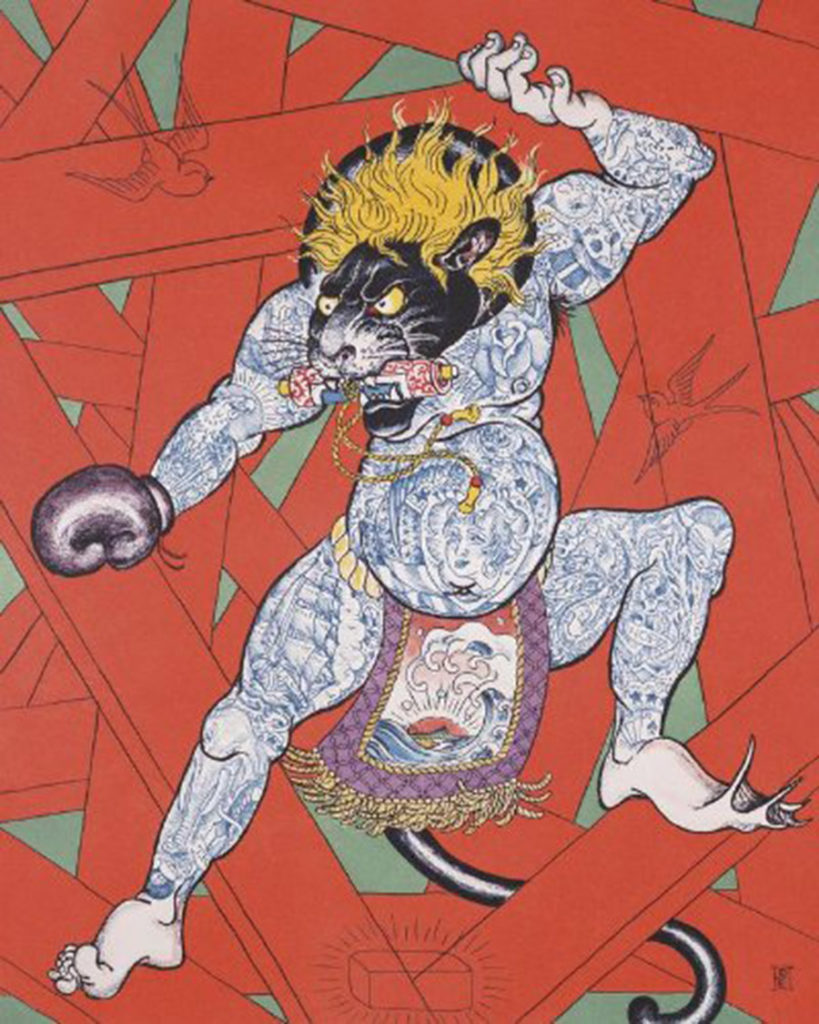
I choosed San Francisco to open Realistic in june 1974. The city has such a long history of alternative paople, people very unique, appart from the rest of society. It’s why it had such a huge impact on world culture in those days and especially in the 60’s, when I was going to art school. In the early 70’s there was still a whole tremendous amout of social changes taking place. In fact I didn’t want to do any traditionnal tattoos, because then there was no retro love for it. One time, I remember saying to Bob Roberts (Bob Roberts, tattooer from Los Angeles, now working at Spotlight Tattoo) who was working for me at Realistic: « We really have to do things that are totally unique. » That day a punk-rock chick came in for a tattoo and Bob put a big black panther on her arm. I found out and said : « Did she want that ? ». Bob replied « Oh, she wanted some other thing… » and so he taped her into. I was furious. He protested : « These designs are great man, this is what a tattoo should look like !».
Bob is a great artist and a great tattooer, but I was so pissed of. I said: « You can’t just fucking push something that you want to do, that’s the whole deal with this place ! You’re going to have to take the trouble, to figure out what’s gonna fit them and then draw it ! ». Of course I knew it was powerful stuff, it was flashs that I had been tattooing in the past, but I realised that I would have to deal with this very rigid way of thinking.
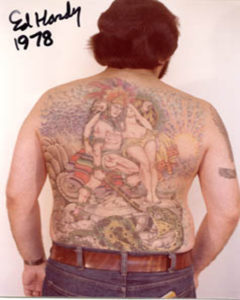
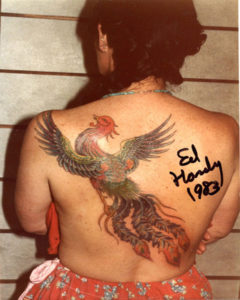
What goals did you have in mind?
I wanted them to realise that they could create something that nobody had seen. It was important, because it’s them ! They’re creating an identity badge of what their consciousnes was about. This is why people gets so upset about it too, wether they’re conscious of it or not, but it brings up the idea of mortality. I think it’s one of the most powerful kinds of mark makings that we have as a species and now that it’s gone to this degree, it will never go back.
How would you do with your customers to personalise the tattoo?
It was really challenging. I used to think of me like a police sketcher artist in the old days where you have him at the police station who would interview a victim : « What did the person looked like ? How tall was he ? Were his eyes like this ?... »And they would draw this up. And that was what I saw my job to do : to pull on paper this vague or sometimes specific ideas people had in their head ; and usually they were not visual people. I could really tune into what they liked, the feeling they wanted the piece beyond exactly the picture itself. When after showing the drawing they would get like:« That’s exactly what I had in my mind ! », I felt really good that I could sense something like this.
How difficult was it to do such dedicated commission work ?
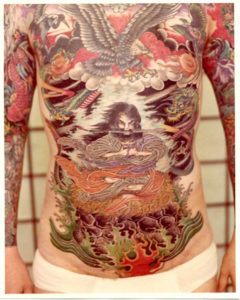
I would draw in the morning, I would draw at night –I was not dead drunk every night (laughs). I would just try to track whatever they seem to be interested in. I put a lot of time into that and sometimes research with things people wanted, and add something in the sense of trying to develop their concept further with my interest in what were available art. In 1987, there was one guy, a terrific customer, he was a physician from Texas…He was a huge Richard Wagner fan, obsessed. He decided he wanted a whole body-suit with scenes from the « Ring of the Nibelung »(Cycle of four operas written by the german composer).
I said : « Waow, it sounds great ! »Because I was assuming that it is such a famous opera there must have been quite illustrations for it somewhere. So I agreed to do the job, we set the date you know and then I started looking… I could find nothing. I thought :« Jesus ! ». I knew a lot about classical european art from certain old periods but I didn’t know specifically about what would be the accurate costumes and all that stuff. And then finally I found a book that was really fantastic, with illustrations of characters tied with ropes, the ropes of destiny, and the ropes kind appear all through the tattoo, I read a lot about what happened in the mythology too. It’s a great tattoo. I really hit it off and the guy sat really well, he had a great sense of humor, but I definitely depended on being able to still ideas and have reference points from things.
Technically speaking, how demanding were these new field you were experimenting?
The biggest thing was the number of pigments, the colours available : we didn’t have a range of pigments in those days. When I first met Zeke Owe (american tattooer with who Ed collaborated several times in the past), on the sign outside the shop he had in Seattle it was written : « Tattooing in 8 colours ». That was a big deal at that time, right. Sailor Jerry was the first person that discovered the purple that could be used, a very strong purple pigment. That was the mystery thing because no one had it, and I appreciated it as a visual artist from even before coming to tattooing : the greater your palette the more potential you had to really create something and get new answers. And early on I began like part mixing colours creating shades and tones, as I worked on a piece. It became very tricky in fact.
I got into trouble when, in 1973, I was working with Kazuo Oguri sanin that way. My role in this place was to fill in behind what Oguri sandid, I wasn’t doing outlines. I was filling his back with a colour I did. The next time he came back I tried to get the same colour that I used and I started tattooing. Later Oguri said :« You can’t change the colours because he wants all the tones to be flat and even ». And he was right. I was so used to doing small tattoos in one time and then you create a colour for it and it’s ok, but not to big scale tattooas as they were doing in Japan.
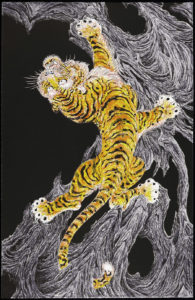
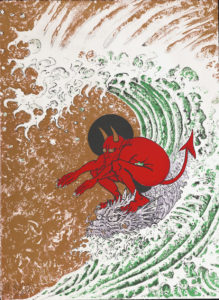
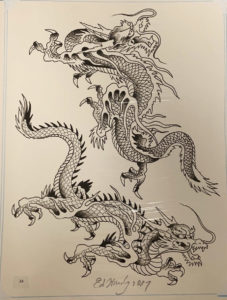
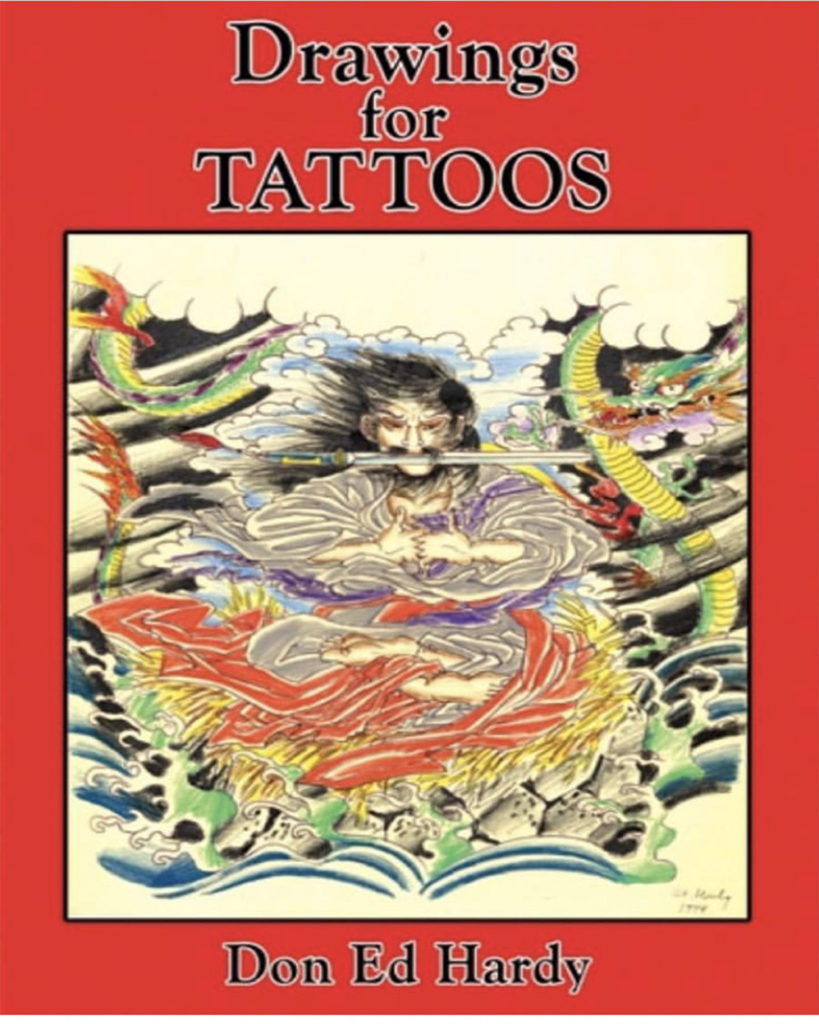
You keep publishing books about the tattoo culture through your publishing company Hardy Marks Publications and the latest one is called « Drawings for tattoos ». Can you tell us about it ?
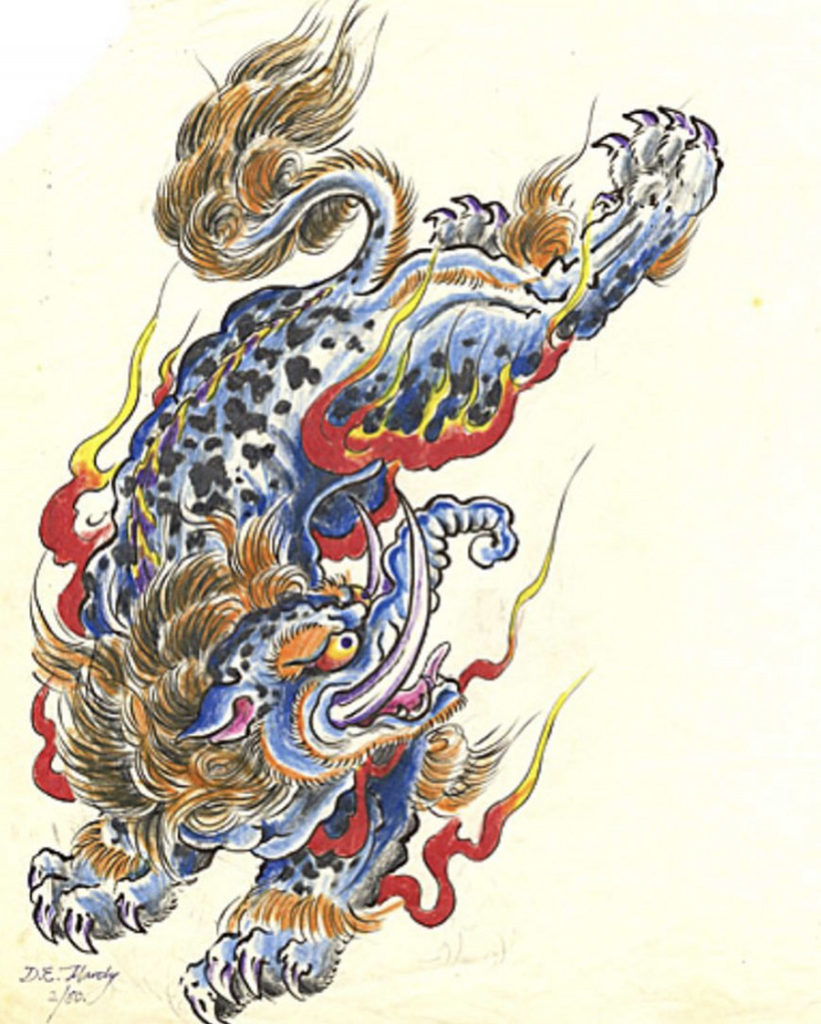
I was in Hawaii in november 2015 and because I didn’t have any painting ideas I started going through all these portfolios with my drawings inside, going way back, some until my student days. While taking them out I though these were pretty cool and we could do a book of these. Tattooers have been buying my drawings over the years and I thought that they may be interested in it, to see how things have developped. There are drawings from 3 years old I was doing, student etchings, early japanese style stuff and stages to show how it evolves from into that … I realised they have a life on their own. I have hundreds of these drawings, I have enough to do 4 or 5 books.
How important is it for you to document the tattoo culture?
I’ve always been serious about keeping oral history because there were no books, nobody else kept formal historic things about tattooing. In 1991, when I first opened Tattoo City on Columbus Avenue, it was almost opposite where Lyle Tuttle’s place is and I went up to see him a couple of times with a recorder. I tried to make him talk about things but he would just go off the subject. In those days too he was doing a lot of speed, and finally I thought I can’t just spend my whole life waiting to get these specific things I’m asking him about. He wasn’t doing it in a mean way, he was just spacey.
At the same time I would say that we would really need to do a book of his life, it was really essential. And he would reply « I lived it, I don’t need to say it all again ! ». It’s really a shame because he just got the oral histories, unlike any one, it goes so far back. He started here in the 40’s I think. When I met him he was tattooing for Bert Grimm (Famous american tattooer working at the Nu Pike -an amusement park in Long Beach, California- from the 50’s to the end of the 60’s), that would have been 55-56. I think he is 12 years older than me. He was very young when he started, 16 or something like that, and then he went to the militaries and the Korean war.
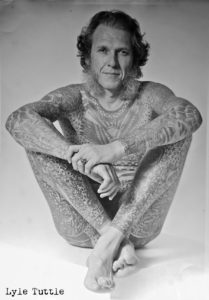
How important was Lyle for the time with all these social changes happening in San Francisco ?
He never was a very good tattooer but he was very important because he was very intelligent about media and using things. When he got on the cover of Rolling Stone in october 1970, he was really the first one to bring tattooing into the modern world, just post-hippie era like 1970’s. I think Lyle realised the power of the media and he realised where he was, in this great spot in San Francisco. He probably realised that the social climate was right for tattooing. Because even in the hippie days people really weren’t getting tattoos, it was very very unusual. I remember in 1966 or something like that, I lived over near the Haight Hashbury (Disctrict of San Francisco where the hippie movement started in the end of the 60’s).
I walked down the street and I had a couple of tattoos on the forearms, very short haircut, wearing these mirror shades, people would think I was a narc you know, they thought I was a cop ! But Lyle, really, he just saw the things were right for. His shop was down by the Greyhound bus depot and in those days it was where a lot of people would travel cheap all over America. He just had a good sense for it, he can tell terrific stories, he’s a terrific bullshitter.
To be successful in tattooing, besides doing good tattoos, I came to realise just as important was your hability to talk to people, to tell stories and to interact with them. And Lyle was perfect. He doesn’t have a lot of formal education – Lyle maybe probably finished high-school and positively didn’t go to college- but he’s very smart, I’m sure he has a very high IQ. But I wish he would just let someone record all of this ! I should see him more often ; once in a while Doug (Doug Hardy, the only son of Ed, works as a tattooer at Tattoo City studio) and I would drive up to see him, we would spend the afternoon, taking him to lunch. I love visiting with him. It’s good to have him around.
Lyle is also a huge collector and like you, passionnate about the history of tattooing…
Lyle is really an historian and he’s been awe about collecting. He travelled around and he saw the virtue to collect this stuff. When Georges Burchett (Famous english tattooer of the 20th century) had died in London, maybe early in the 50s, Lyle later found out that someone in the family had that whole collection, he flew to London and he bought it. I’m sure for very little money but it’s incredible. Things are going back to 19th century, he has just an enormous collection of physical tattoo stuff. He was always trying in the 70’s to get me to buy it : « I’ll sell it to you for a million dollars ! ». It’s not in great shape, it’s not archived at all, it’s like in a garage, he lives further up in North California, about 2 hours away from SF, it’s very wet up there. He was passionnated about Pacific Island tattooing when I was about japanese. He was the first guy to really recognize, he went to Samoa early on.
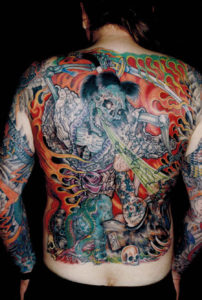
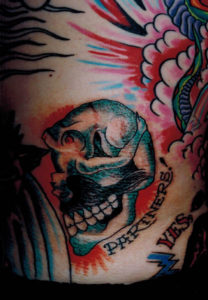

When you arrived in San Francisco in 1974 you were very ambitious but Lyle tuttle was already popular here. What happened ?
We were total rivals, I had no respect for him as a tattooer. I was so young and my ego was so big… And Sailor Jerry, who I was closed too, hated Lyle. In the old days, before real communications, tattooers wanted to hold on to what they had, wether it was a spot in the town. The competition was rough and they would inherit vendettas from somebody: « Ok, it’s his ennemy so it will be my ennemy ! »Jerry helped me, knowing that I had intentions to maybe come back to San Francisco and as he put it :« Sink Lyle Tuttle ! », he just had this terrible competitive thing. So when I got here I had this notion of Lyle, I thought :« That is not right, he gets all the glory and he doesn’t even tattoo very well ».
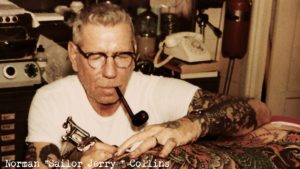
How did your relationship changed over the years ?
I always sort of had a feeling, I bet he and I would have a lot in common if we ever really met. In the end, that’s what happened. I had customers, a couple from London in the late 70’s and then they came to San Francisco. They were very friendly with Lyle and they got us together. During the evening we realised we had all these incredible things in common and all these convergences: we were both born in the state of Iowa and I met Lyle when I was about 10 years old when he was tattooing in Long Beach for Bert Grimm. He was operating a shop for Bert that was just like a closet, this tiny tiny shop, with a huge sign. And I’ll always remember it because he was the first young guy that I saw with the sleeves out. When I went there he kicked me out, saying :« Get out of here, you have to be 18 ! ».
Why did Jerry hated so much Lyle ?
Because he talked to the media. There never was an article about Sailor Jerry, nor an interview with him because he would throw people out. Because of the bad attitude people had about tattooers, they looked down on them so much, they really stucked to themselves, they didn’t want to open up to anybody about anything. Jerry, who really investigated pigments, would lie to people about where he got his. It was all so secretive.Chris Nelson, who had been a merchant seaman, tattooed in a penny arcade near where Lyle was working. Nelson had this paper bag on the chair, next to him. Lyle got so curious about it he finally asked :« Why do you have that bag there ? ». Nelson answered : « Well, if I start tattooing somebody and he starts asking a question, about anything like what’s in the ink or how does the machine work, I’ll tell him : You can’t ask any questions, I’m not going to answer about anything ». If they ask a second question he would take the bag and put it over their head and finish the tattoo ! (Laughs). That’s one of the best images ever heard in tattooing, just the concept ! It would be a great piece of art. (Laughs)
Hardy Marks Publications :
http://www.hardymarks.com
Tattoo City :
700 Lombard St, San Francisco, CA 94133, United States
http://www.tattoocitysf.com
Instagram: @donedhardyart
Musée de Young:
https://deyoung.famsf.org/exhibitions/ed-hardy
RETROUVEZ CET ARTICLE AU COMPLET, PHOTOGRAPHIES ET TATOUAGES, SUR L'APPLICATION
ATC TATTOO


Cliff, craftsman tattooer
Text and Pictures P-Mod
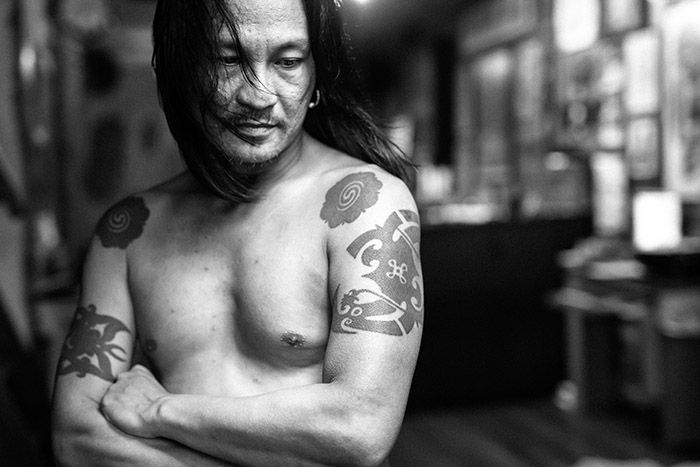
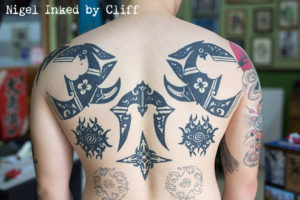
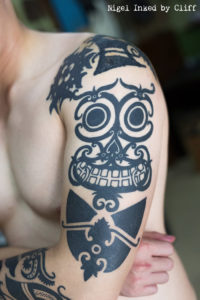
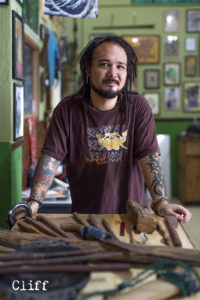
Two sticks topped with sculpted deities, one completed by a needle, the other used as a hammer: here are the Iban tattooers' only tools. Cliff, craftsman tattooer, passionate with traditional tattooing methods, makes them upon request in his Kota Kinabalu studio.

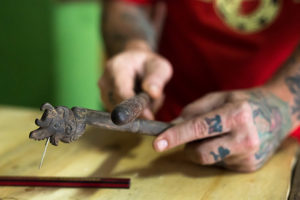
As he was living in Vancouver, Cliff, then 29, discovered hand-tapping tattoo as he visited the North American aboriginal communities who still practice it. He then lived in Papua New Guinea, where he pursued his discovery of tribal tattoo. Then, he got a sak yant tattoo, a sacred Thai mark on his hand, by Ajarn Man, based on the island of Koh Phangan.
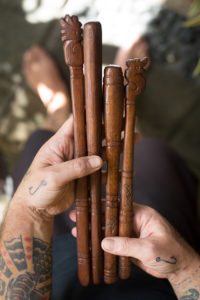
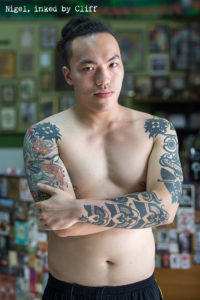
In 2001, the 29 year old young man quit his designer job in the sector of video games at Electronic Arts and came back to his native land in the State of Sabah, north-west of Borneo. Since then, he has been tattooing updated Iban patterns at Orangutan Studio, a big shop with raw decoration, looking like a carpentry workshop, where he makes sticks sets.
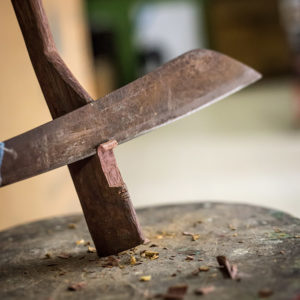
The making of a set requires a machete, a week of work and a lot of precision. Cliff works with hard materials, like iron wood from Borneo, called belian in the local language, a red wood called belabah and an orange wood called sereya.
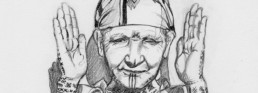
Berber Tattooing In Morocco's Middle Atlas En
Texte : Tiphaine Deraison / Visuels : Leu Family ©Seedpress
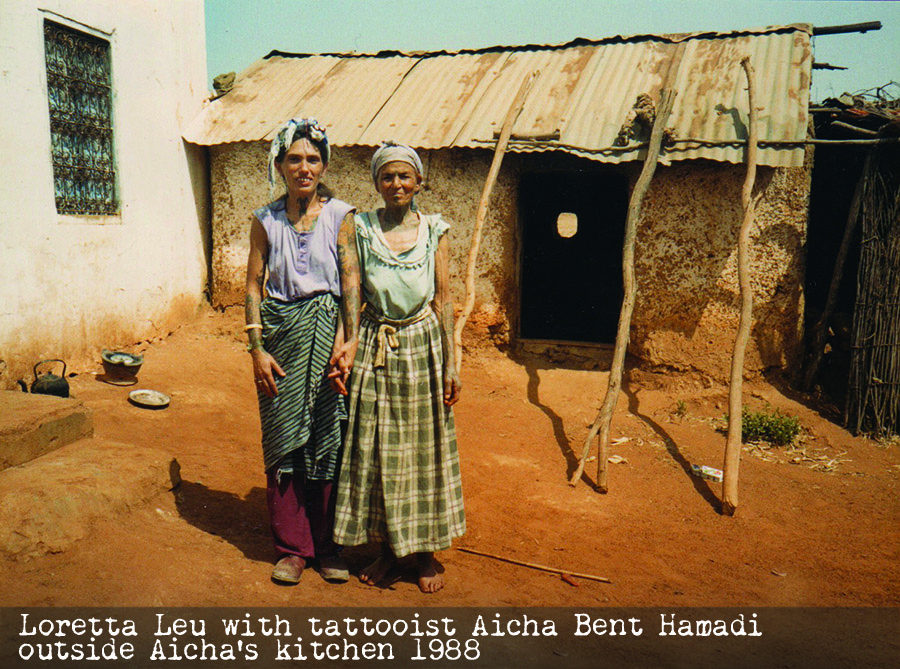
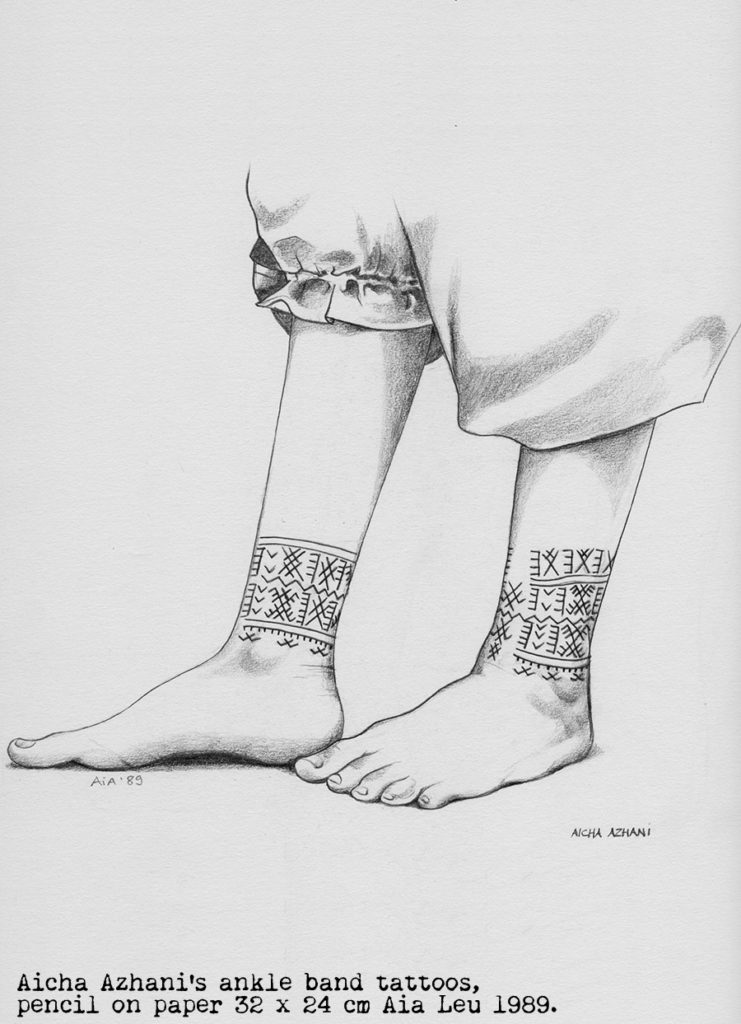
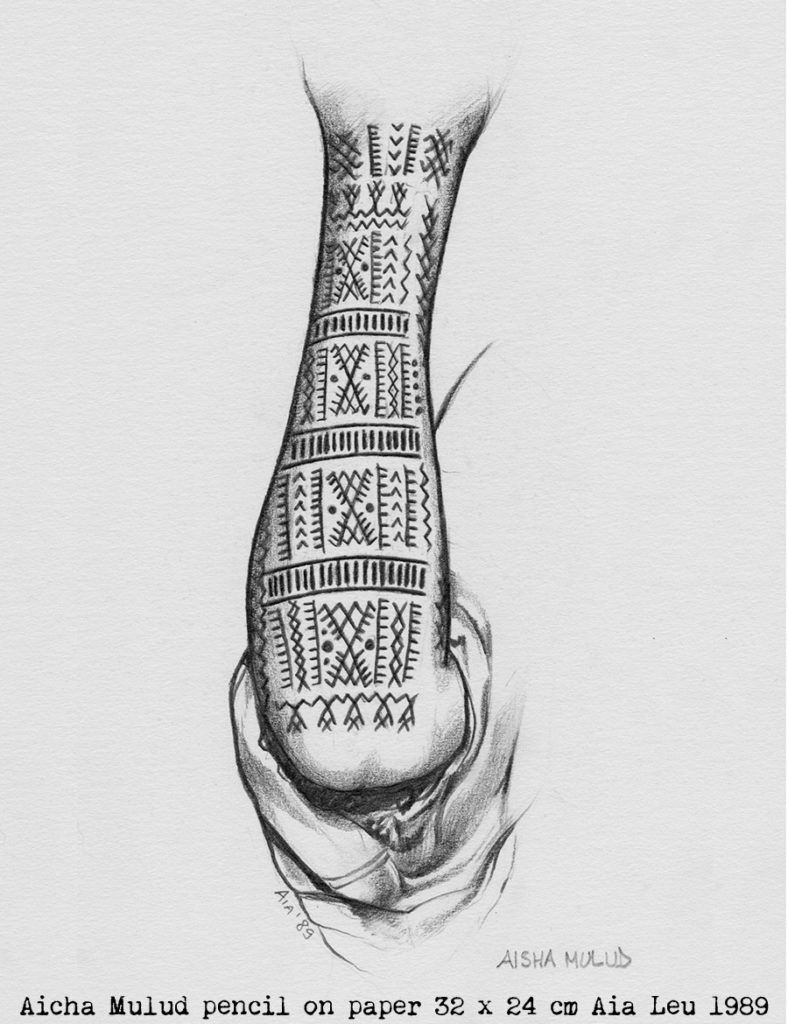
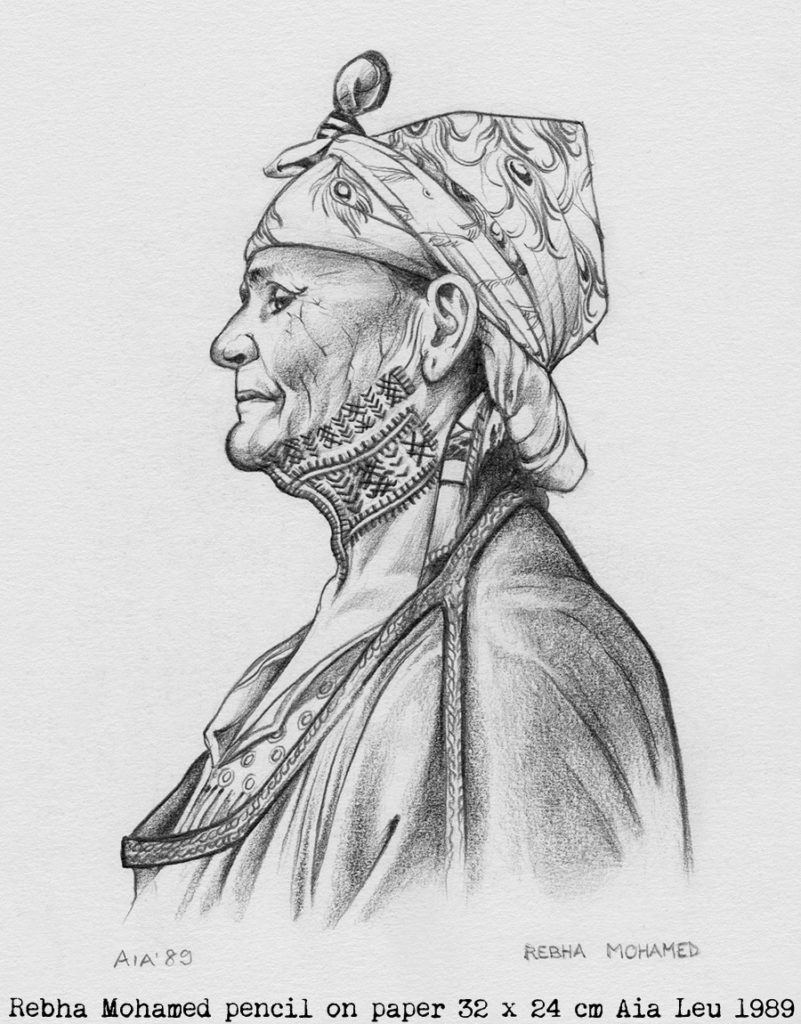
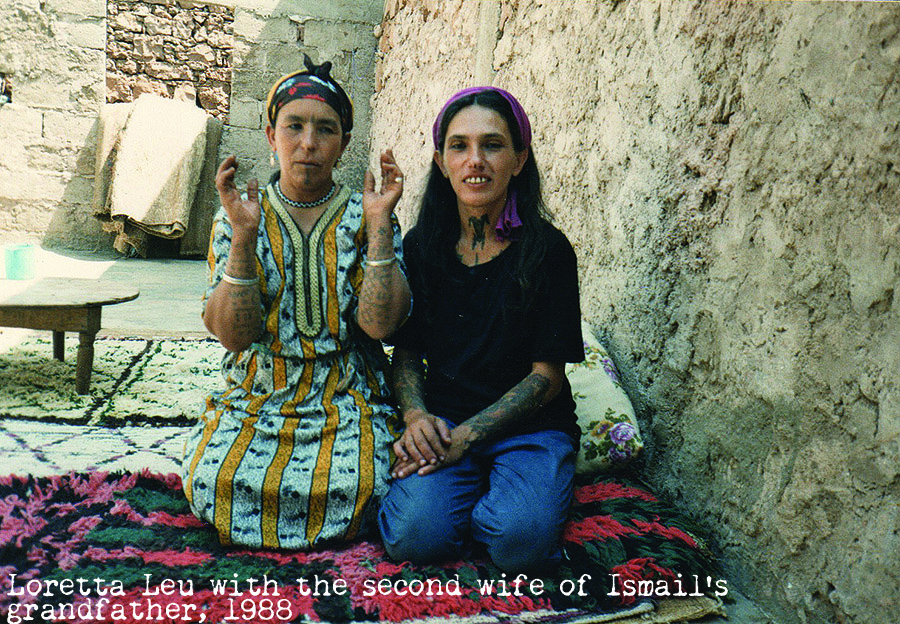
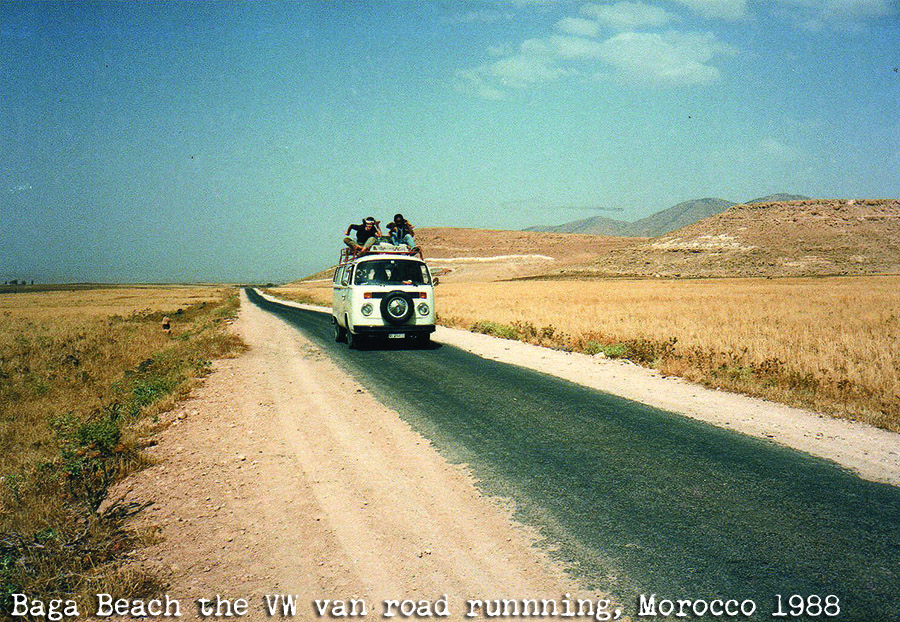
Immersion d'un rare détail dans l'art du tatouage Berbère Marocain, "Berber Tattooing In Morocco's Middle Atlas" est un témoignage unique. C'est aussi le résultat d'une série de rencontres fortuites. Le tout ensuite disséminé dans un récit d'aventures vécues par une famille bien connue de la communauté tattoo. Récit du voyage de Felix et Loretta Leu en 1988, il y a donc trente ans dans le monde rural et intime des femmes des tribus Berbères.
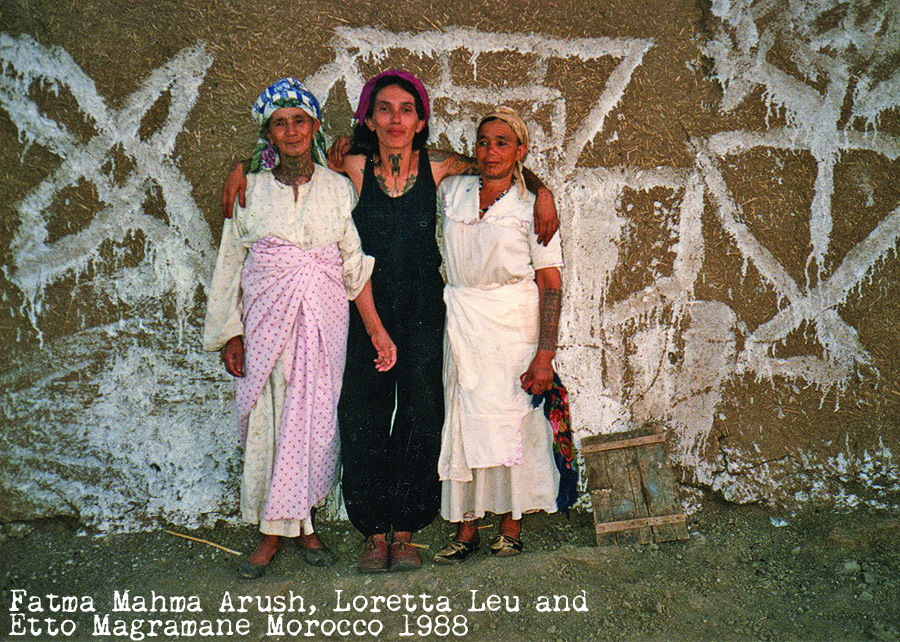
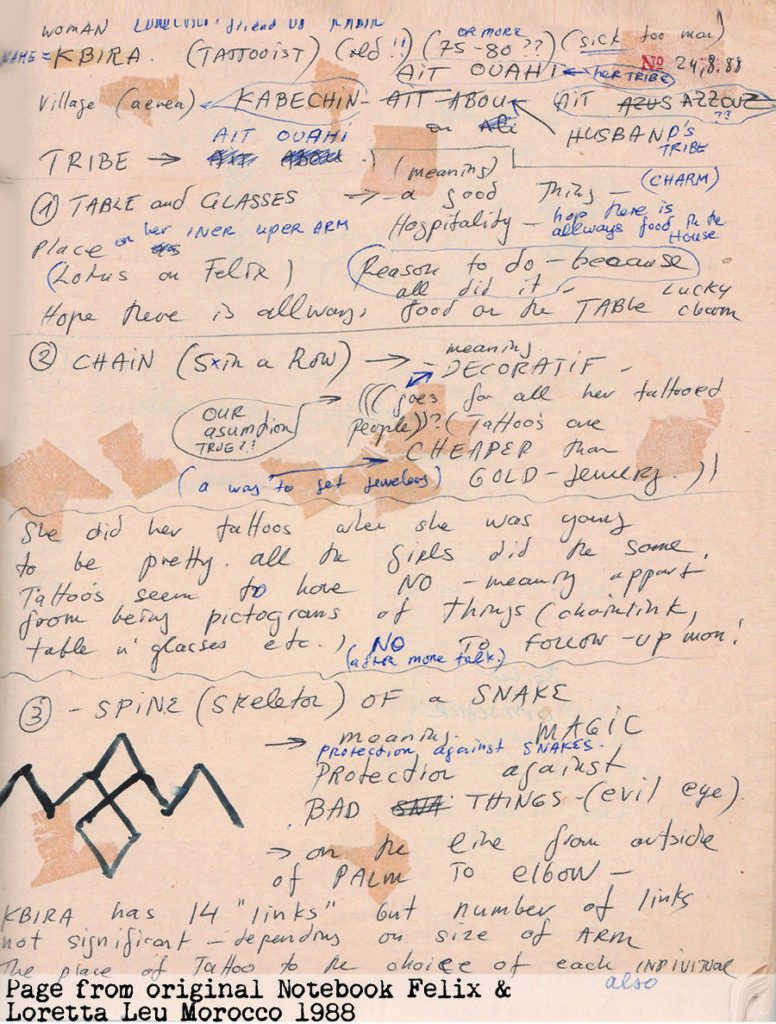
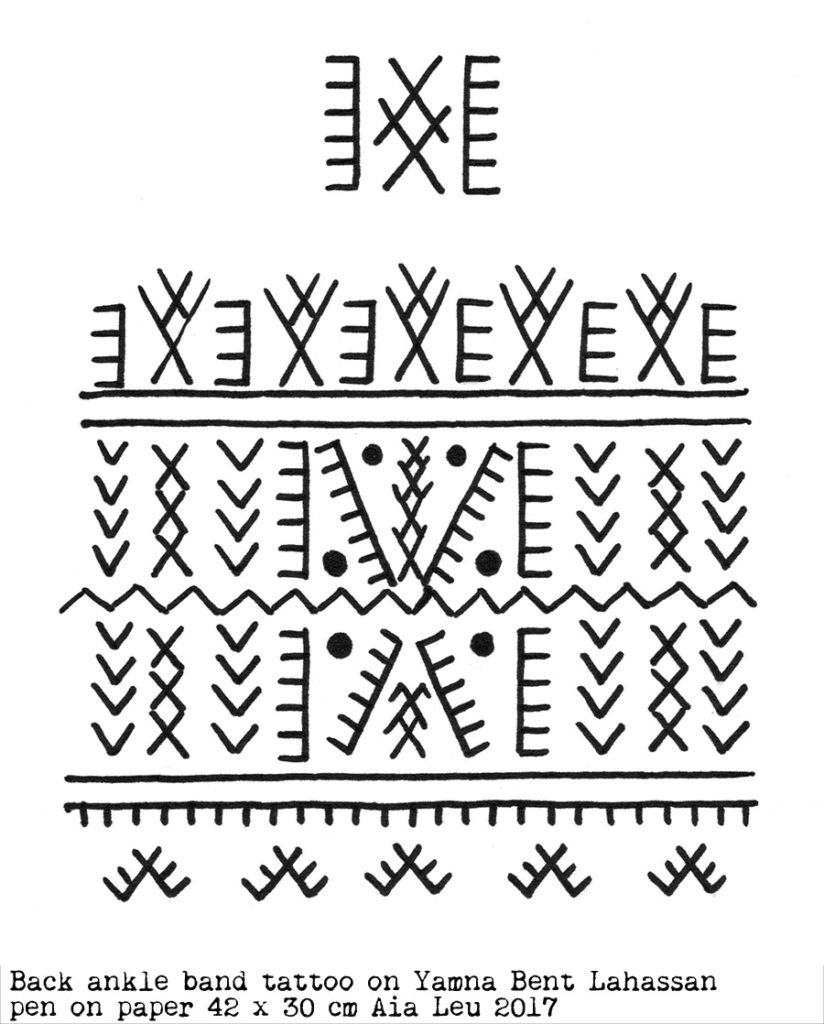
En 1988, quand la famille Leu pose le pied pour la première fois dans l'Atlas Marocain, ils sont accueillis par une famille locale, leur seul moyen de garder trace de cet art dont ils sont témoins sera d'apprendre, de reproduire et dessiner ces tatouages mais aussi d'en comprendre le sens et l'histoire transmise.
Berber Tattooing : une tradition orale du tatouage
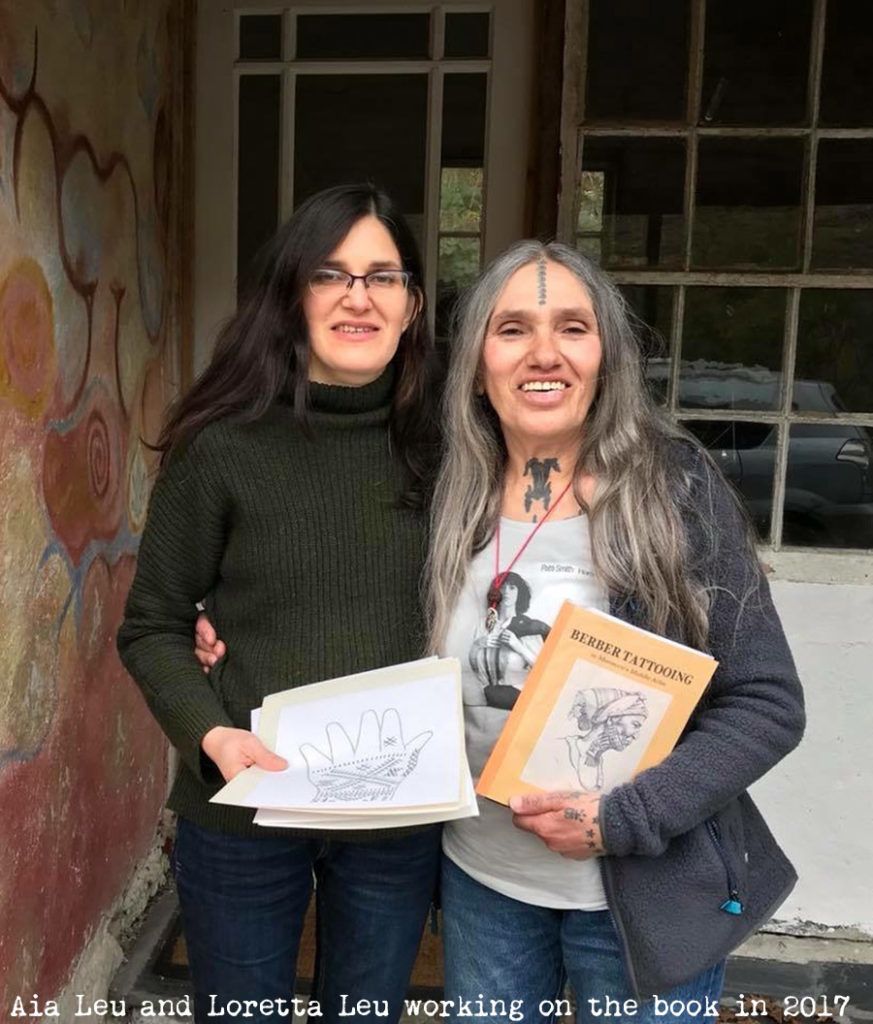
Seule la tradition orale délivrée de femme en femme puis les dessins de Aia Leu rassemblés permettent une étude approfondie de cet art, ancestral que perpétuent les femmes berbères. Un tatouage traditionnel inscrit dans leur culture et leur vie quotidienne et capturé avec sensibilité dans cet ouvrage. Car cet art est en voie de disparition. Peu documenté il est aussi aujourd'hui de moins en moins pratiqué. C'est pourquoi, seules les plus anciennes générations en sont encore les gardiennes au savoir inestimable.
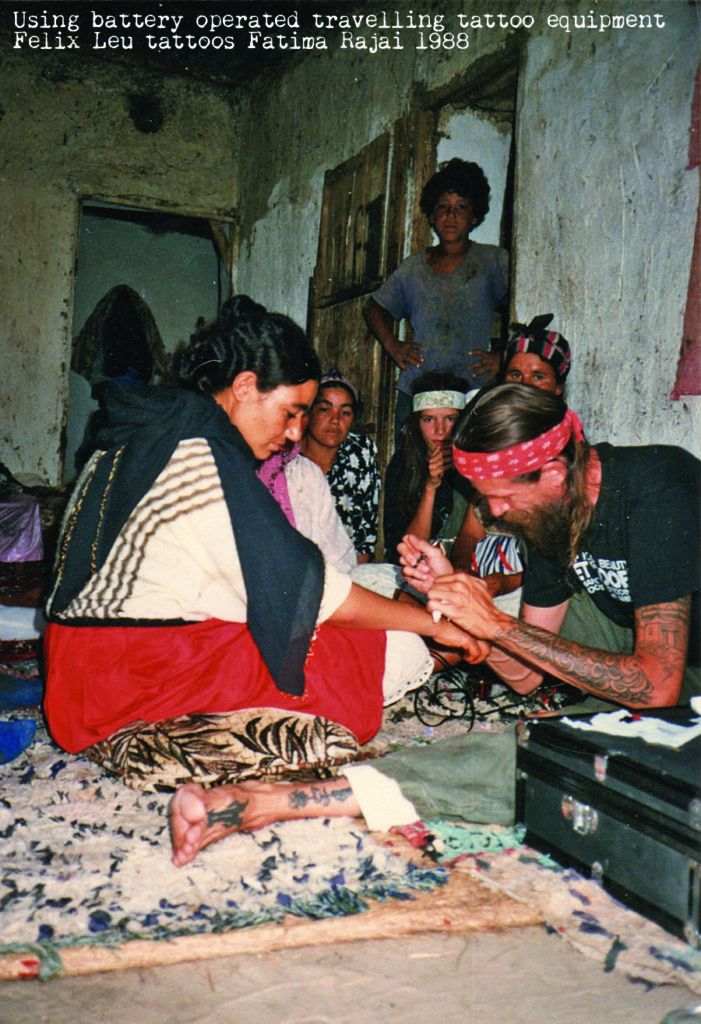
Hommage au tatouage, la famille, l'art et à ces femmes et issu des voyages de Felix et Loretta Leu, famille d'artistes, qui découvre le tatouage en 1978. L'ouvrage des Leu est, en conclusion, une source unique de documentation indispensable pour tout passionné de tatouage.
Berber Tattooing In Morocco's Middle Atlas
Felix & Loretta Leu
Illustrations par Aia Leu
Publié le 16 Novembre 2017
50 photos couleur 37 illustrations
42€
RETROUVEZ CET ARTICLE AU COMPLET, PHOTOGRAPHIES ET TATOUAGES, SUR L’APPLICATION
ATC TATTOO